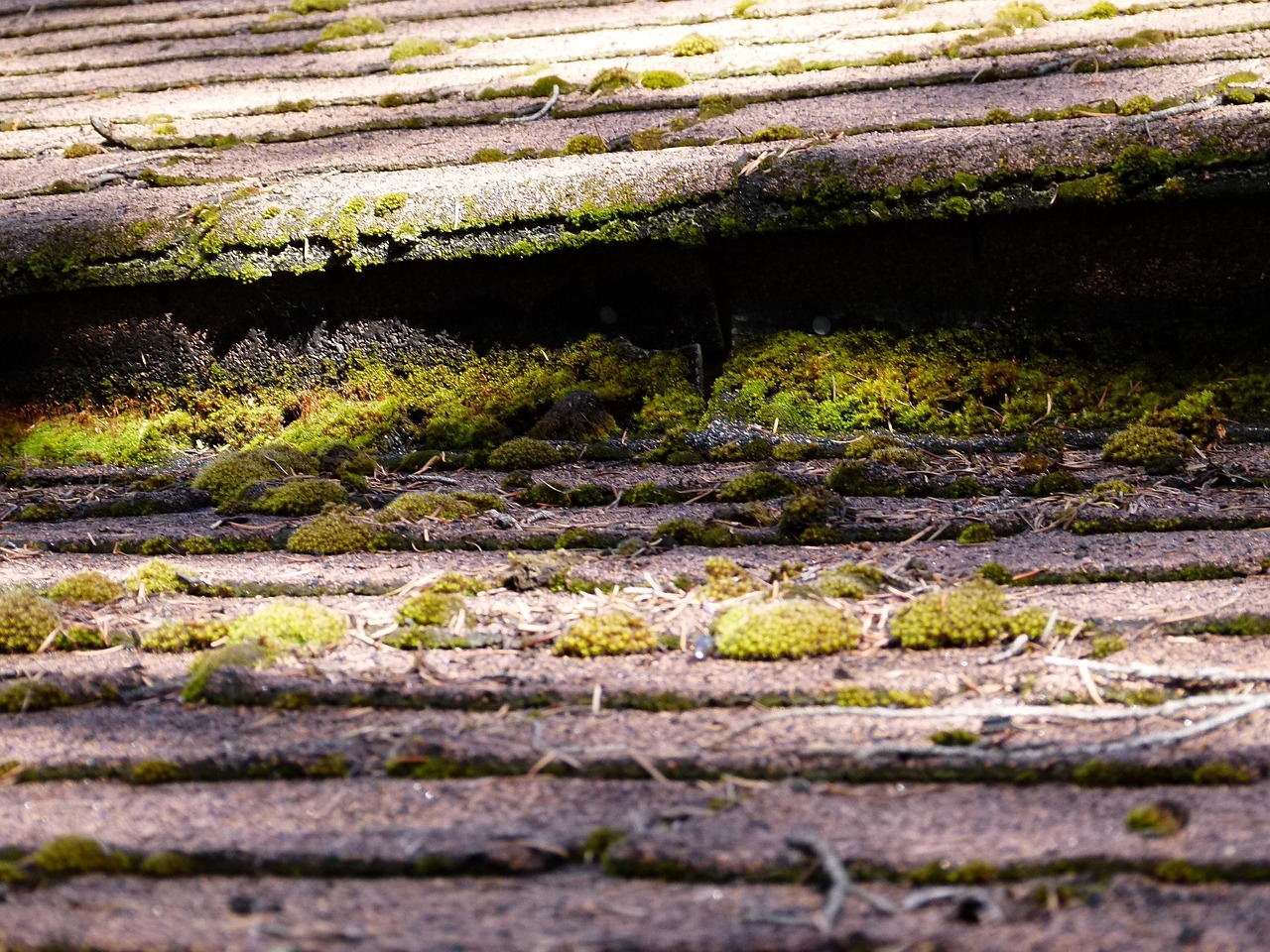
Drive any older street in Sherman on a still August morning and look up at the roofs. On the slopes that face north, or sit under a big pecan or live oak, the shingles are not one even gray. They carry long dark tear tracks running from the ridge toward the gutters, heaviest where the morning dew lingers longest. A few miles north, the Texas Water Development Board puts Lake Texoma at roughly 74,686 acres of water on the Red River, sitting across the Grayson County and Bryan County line behind Denison Dam. Damp air and long shade are a large part of this story.
Black streaks on a roof are one of the most common things homeowners here ask about, and one of the most misunderstood. Some people assume the roof is rotting. Others reach for a pressure washer. Both reactions are built on myths, and the corrections below are what actually helps you decide what to do.
Myth 1: The Black Streaks Are Dirt, Soot or Shingles Breaking Down
The dark streaks on most roofs are living algae, not dirt or decay. The Asphalt Roofing Manufacturers Association explains that the discoloration is usually brown to black and is easily mistaken for fungus, soot, dirt, moss or tree droppings. Several algae species can be involved, and Gloeocapsa magma is probably the most common. The spores travel on the air, settle on a roof and grow there, and their natural pigment is what darkens the surface.
That matters because each of the look-alikes points to a different response. Soot near a chimney says something about the flue. Tree droppings and moss tend to be localized, according to the same ARMA guidance, while algae spreads across a slope as streaks or as an even, darkening stain. If the marks follow the slope in long vertical runs and cover a wide area, algae is the likely culprit.
Myth 2: Roof Algae Is a Coastal Problem, Not a North Texas One
Roof algae grows wherever warmth and moisture sit on a roof long enough, and that includes Grayson County. ARMA notes that the discoloration is most widespread in the Gulf States and along the Northwest and Eastern Seaboards, but that it occurs across the U.S. and into southern Canada, particularly in warm, humid conditions. North Texas summers check both of those boxes for weeks at a time.
What decides which roof gets it first is how long the surface stays wet. A housing specialist at University of Georgia Extension observed that growth is usually heaviest on west- or north-facing roofs or on those shaded by trees, because dew dries more slowly there. In Sherman that describes the north slope of almost every gable roof, plus any house tucked under mature trees in the older neighborhoods near downtown. South-facing slopes on the same house often stay clean for years.
Why the streaks are vertical
Rain and dew carry spores and moisture down the roof along the same paths every time. Growth follows those paths first, so early algae shows as narrow streaks or wedge shapes that later widen and merge into an even dark cast across the slope.
Myth 3: Streaks Mean Your Roof Is Failing and Needs Replacing
Algae streaks on their own are a cosmetic problem, not a sign of a failing roof. The UGA Extension piece is direct about it: these stains do not mar the roof's strength or service life. A streaked roof can be structurally sound, watertight and nowhere near the end of its life.
The catch is that a streaked roof is often also an older roof, and age brings its own problems that algae has nothing to do with. The same UGA guidance suggests using any visit to the roof to check for cracks, curling corners, buckling edges and lost granules. Those are the findings that tell you about remaining life. A replacement decision should rest on them, not on the color of the north slope.
Myth 4: A Pressure Washer Is the Fastest Way to Clean It Off
A pressure washer is the fastest way to shorten the life of an asphalt roof. ARMA warns that high-pressure washing is likely to damage asphalt roofing and says not to use a power washer, or any brush or broom, to remove algae. The granules on a shingle are not decoration. They shield the asphalt from sunlight, and in a Texas summer that protection is doing a lot of work.
Scrubbing causes the same harm more slowly. ARMA cautions that scrubbing can loosen and remove granules, which means a clean-looking roof can come out of the job with less protection than it went in with. If you see a crew on a neighboring roof with a wand and a high-pressure rig, the roof may look better that afternoon and age faster afterward.
Myth 5: Bleach Kills the Algae for Good
A bleach wash lightens algae stains, but the results are temporary. ARMA describes a solution of household bleach and water left on the roof for about fifteen to twenty minutes, then rinsed gently, and states plainly that the stain may come back. The spores that caused the first round are still in the air, and the north slope will still hold dew the same way it always has.
There are also practical limits on doing it yourself. ARMA notes that mixing directions vary by manufacturer and severity, that no other chemicals or methods should be used without the shingle maker's approval, and that the process makes a roof slippery. It recommends eye protection and rubber gloves, protecting landscaping and nearby building surfaces, and working from a ladder or walk boards where possible. Its overall recommendation is that roof cleaning is a job for trained professionals.
- Low pressure only, never a power washer
- No brushes, brooms or scrubbing
- Only cleaning methods the shingle maker approves
- Plants and gutters protected from runoff
- Someone trained and secured for a slick roof
Myth 6: Nothing Can Keep the Streaks From Coming Back
Algae-resistant shingles are designed to keep streaks from returning, and they are the most lasting answer on a roof that is prone to it. ARMA says these shingles are commercially available, are designed to inhibit algae growth for extended periods, and are worth considering when reroofing a roof that is vulnerable to algae.
The approach varies by manufacturer, and the details are worth reading. GAF's description of its StainGuard Plus technology says it uses specially engineered capsules that release copper steadily over time, as an alternative to more traditional copper-coated granules, and that qualifying products carry a 25-year algae protection limited warranty against blue-green algae discoloration. Other shingle lines use their own versions. The point for a Sherman homeowner is that the fix for a chronic north slope is chosen at the shingle aisle, not with a sprayer.
None of that helps a roof with plenty of life left, and there is no good reason to replace a sound roof because of streaks. It does matter a great deal if the roof is due for replacement in Sherman anyway. Asking whether the shingle quoted is algae resistant costs nothing and can save you a decade of looking at the same stains.
Myth 7: Moss and Algae Are the Same Thing
Moss and algae are different growths with different consequences. Algae forms a thin pigmented film that stains the surface. Moss is a raised, spongy plant that builds up in clumps, usually where debris collects and the roof stays shaded and damp. ARMA treats moss as something that typically shows up in localized spots, unlike the broad discoloration algae leaves.
Moss deserves more attention than streaks do, because clumps hold water against the shingle for long stretches. It tends to collect in valleys and behind chimneys, especially under heavy tree cover. If you see green cushions rather than dark tracks, that is a reason to have someone look closely at the shingles around it, not just a reason to clean.
What to Do About the Streaks You Have Now
Start by deciding what you are actually looking at. Long dark runs on the north or shaded slopes are almost certainly algae and almost certainly cosmetic. Green clumps, curled shingle edges, bare patches where granules have gone or stains on the ceiling inside are different problems, and they matter more than the color of the roof.
If the roof is sound and the streaks bother you, choose a gentle, manufacturer-approved cleaning by trained hands, never a pressure washer. If the roof is near the end of its life, put the money toward algae-resistant shingles on the next one rather than cleaning the old one.
When you cannot tell whether the dark marks are hiding wear underneath, a roof inspection from Sherman Roofing Texas sorts cosmetic staining from the damage worth fixing, and our roof repair team handles whatever turns up.