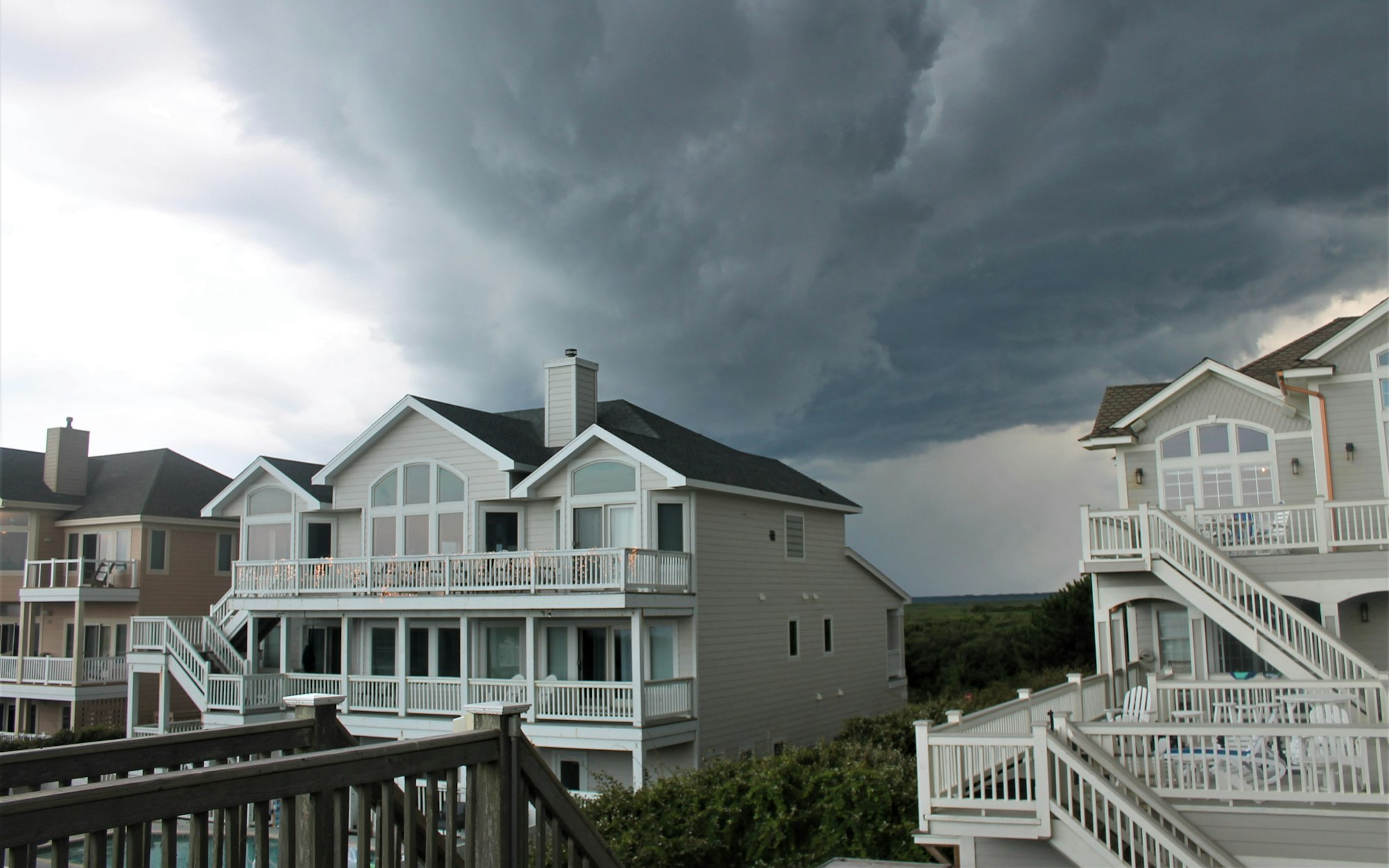
After a night of hard thunderstorm gusts, how do you tell whether your roof actually took wind damage, or just lost a few leaves and a gutter screen? That is the question behind most calls about wind damage to roof shingles in Sherman, and it is harder to answer than hail. Hail leaves marks you can count. Wind tends to leave shingles that look fine from the driveway but have been bent, unsealed or creased in ways that only show up up close, sometimes months later as a leak.
What Counts as Wind Damage to Roof Shingles?
Wind damage to roof shingles is any lifting, creasing, tearing or loss of shingles caused by wind pressure pulling on the roof covering. In North Texas the usual culprit is not a tornado but the straight-line wind that rushes out of a thunderstorm. NOAA's National Severe Storms Laboratory explains damaging straight-line winds as thunderstorm winds that cause damage at the ground, classed as damaging once they exceed 50 to 60 mph, and notes they can reach 100 mph along a damage path hundreds of miles long.
Grayson County sits in the path of these systems every spring. The National Weather Service office in Fort Worth documented one example in its write-up of the May 2, 2007 high wind derecho: several reports of 80 mph winds from the Metroplex eastward, a measured 71 mph gust at the McKinney airport in Collin County, which borders Grayson to the south, and roofs and metal buildings damaged across North Texas.
Why Do Shingles Fail in Wind Before the Rest of the Roof?
Shingles fail first because the only thing holding each tab flat against wind is a thin strip of adhesive plus the nails above it. The Insurance Institute for Business & Home Safety's research on wind uplift of asphalt shingles calls the seal strength between shingles the most important factor in how self-sealing shingles perform in high wind. That adhesive is temperature activated: it needs warmth to bond the bottom edge of one shingle to the one beneath it.
Two things follow from that. First, shingles installed in cold weather or on very steep slopes may never bond properly unless they are hand-sealed, which IBHS notes the asphalt roofing industry recommends in those cases but is not common practice. Second, once a tab is unsealed, wind can get under its leading edge and lever it upward. Each gust bends it at the nail line, and asphalt baked by years of Grayson County summers does not bend gracefully.
Wind also loads different parts of the roof unevenly. Edges, corners, ridges and hips take more uplift than the middle of a slope, which is why damage there is so often the first thing a roofer finds.
How Do You Check Your Roof for Wind Damage After a Storm?
Work through these steps in order, from the safest vantage points first. None of them require climbing onto the roof, and a wet or storm-damaged roof is a bad place to be.
1. Walk the yard before anything gets mowed or raked
Look for shingle pieces, ridge cap, flashing or vent caps on the lawn and along fence lines downwind of the house. Debris tells you something came off, and which side of the roof to look at first.
2. Scan the edges, ridges and hips with binoculars
Stand back far enough to see each slope and work along the eaves, rakes, hips and the ridge line. Missing shingles show up as a patch of a different color, usually the darker underlayment or the brown-black mat of the shingle below.
3. Look for tabs that sit wrong in the field of the roof
A lifted or flipped tab casts a small shadow line that the neighbors' shingles do not. Low morning light across the slope makes these easier to spot.
4. Check for creases, the sign that is easiest to miss
A creased shingle has been bent upward by wind and folded back down, leaving a horizontal line across the shingle just below the course above it. From the ground it may only look like a faint stripe. Up close it is a permanent weak point where the mat has been strained, and it is often where a wind-damaged roof starts leaking.
5. Inspect the metal and penetrations
Look at the drip edge, flashing at walls and chimneys, turbine and box vents, and plumbing vent boots. Wind can bend flashing away from a wall or rack a turbine vent, opening a path for the next rain.
6. Look at the gutters, fascia and soffits
Gutters pulled away from the fascia and soffit panels pushed in or missing tell you the wind was working on the roof edge. A gutter and downspout problem after a storm often sits right next to shingle damage at the eave.
7. Go into the attic in daylight
With the attic lights off, look for pinpoints of daylight through the decking, damp or dark spots on the wood, wet insulation and fresh stains around vents and the chimney.
8. Photograph everything with dates
Take wide shots of each side of the house and close-ups of debris, gutters and interior stains, and note when the storm came through. Same-day photos are far more useful than ones taken weeks later.
Which Roof Problems Are Not Wind Damage?
Not every loose shingle was put there by the last storm. A detailed review published by IIBEC on misconceptions about wind damage to asphalt shingles makes the point that a shingle which is simply not adhered, with no crease, fold, tear or missing piece, is not by itself evidence of wind damage. The same article notes that shingles tend to unseal in a natural pattern as they age, and that installation problems such as under-driven nails or debris on the sealant strip can keep shingles from bonding in the first place.
Patterns matter too. Unsealing that runs in neat diagonal lines or shows up evenly on every slope, regardless of which way the storm blew, points to age or installation rather than one wind event. Wind damage tends to concentrate on the exposed side of the house and on edges, hips and ridges.
A roof can need repair even when the cause is age rather than a storm, and those are two different conversations with an insurer. An inspection by a roofer that photographs each slope separately sorts out which one you are looking at.
What Should You Do in the First 48 Hours?
The first priority is keeping water out of the house, and the second is preserving the evidence. If shingles are missing over a living space and more rain is coming, a temporary dry-in or tarp over the opened area limits damage to the decking, insulation and ceilings.
- Keep debris that came off the roof, at least a few pieces, until the roof has been looked at.
- Move valuables away from any ceiling stains and put a container under active drips.
- Check your homeowner's policy for how quickly storm damage must be reported, and notify your carrier promptly if you plan to file.
- Write down the date and approximate time of the storm.
- Avoid signing anything with a door-to-door crew until you have had the roof looked at by someone you chose.
Even without a claim, creased tabs and lifted flashing are cheaper to fix now than after another storm season. Sherman Roofing Texas handles roof repair for this kind of localized wind damage, and roof leak repair when water has already found its way in.
How Can a Roof Be Made More Wind Resistant?
A more wind-resistant roof comes mostly from what happens at installation, and a replacement is the moment to get it right. Shingles carry wind ratings from standardized uplift testing, and higher classes are designed for higher wind loads, so it is worth asking which rating a quoted shingle carries.
Installation details matter as much as the product. Following the manufacturer's nailing pattern, using proper starter strips at the eaves and rakes, and hand-sealing when shingles go on in cold weather all strengthen the parts of the roof that wind attacks first. If a roof has reached the point where wind keeps finding weak spots, roof replacement with attention to edges and sealing is often the more durable fix.
Wind Damage FAQ for Grayson County Homeowners
Can a roof have wind damage if no shingles are missing?
Yes. Creased tabs, lifted ridge caps and bent flashing all count, and they are common after a storm that left every shingle in place. A crease is a permanent strain line in the shingle, so it can lead to a leak long after the storm is forgotten.
How strong does wind have to be to damage shingles?
There is no single number. NOAA classifies thunderstorm winds as damaging once they exceed 50 to 60 mph, but an older roof with unsealed tabs can lose shingles in less, while a well-sealed, higher-rated roof may ride out much stronger gusts. Age, installation and exposure decide more than the forecast does.
Will lifted shingles seal back down on their own?
Do not count on it. The adhesive is designed to bond during warm weather after installation, and an aged or contaminated strip may not grab again. A shingle that has been creased keeps its crease even if it lies flat, so it should be repaired or replaced rather than left to chance.
Who should look at my roof after a big wind storm?
A roofer who will put the findings in writing with dated photographs is the best first step. The storm and hail damage roof assessment offered on this site is free and covers each slope, flashing and collateral damage such as gutters, so you know what you are dealing with before deciding on repairs or a claim.